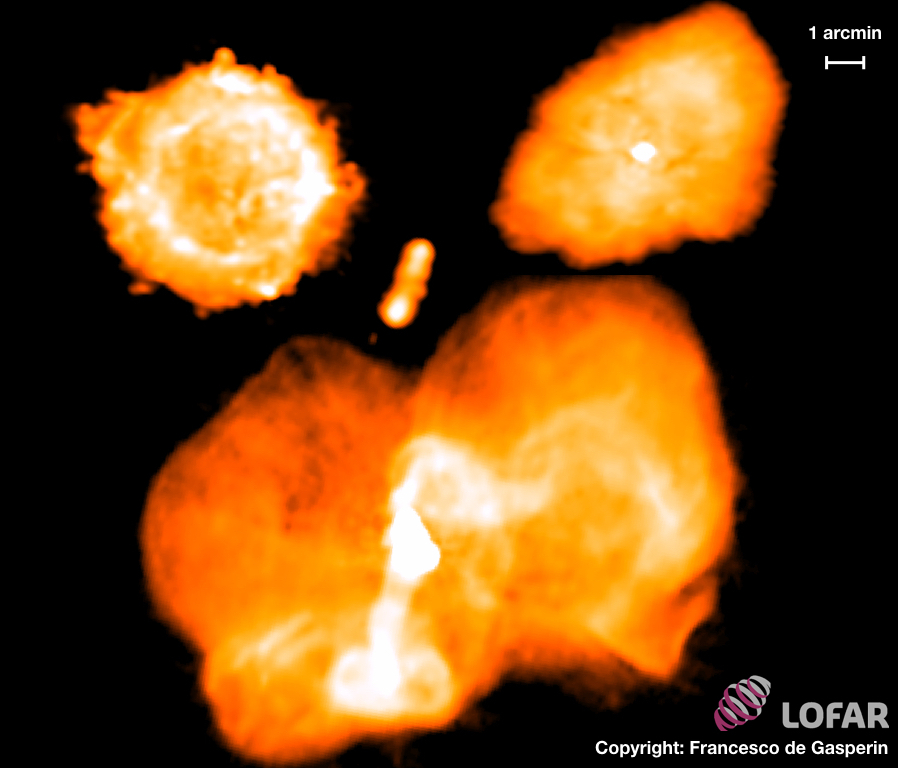
Diffuse Radio Emission from Galaxy Clusters (van Weeren, de Gasperin+ Space Science Reviews, 215, id.16) http://www.galaxyclusters.com
A radio spectral index map and catalogue at 147–1400 MHz covering 80 per cent of the sky (de Gasperin+ MNRAS 474, 5008) http://tgssadr.strw.leidenuniv.nl/spidx
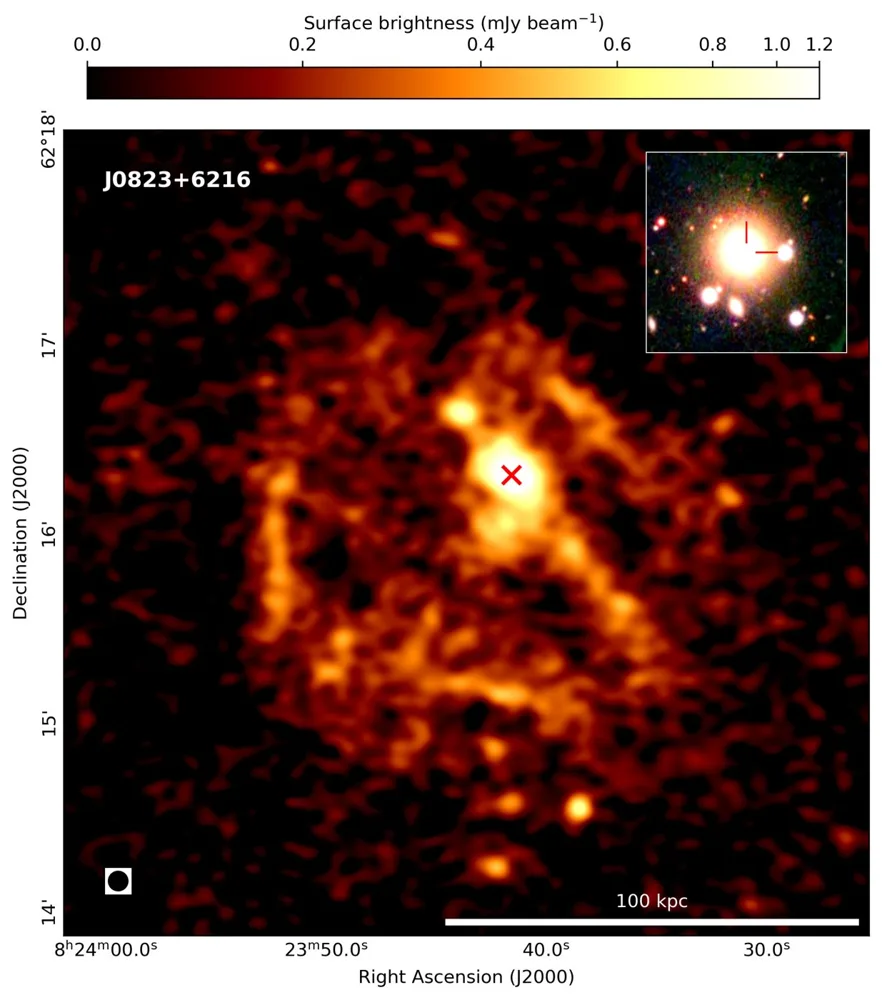
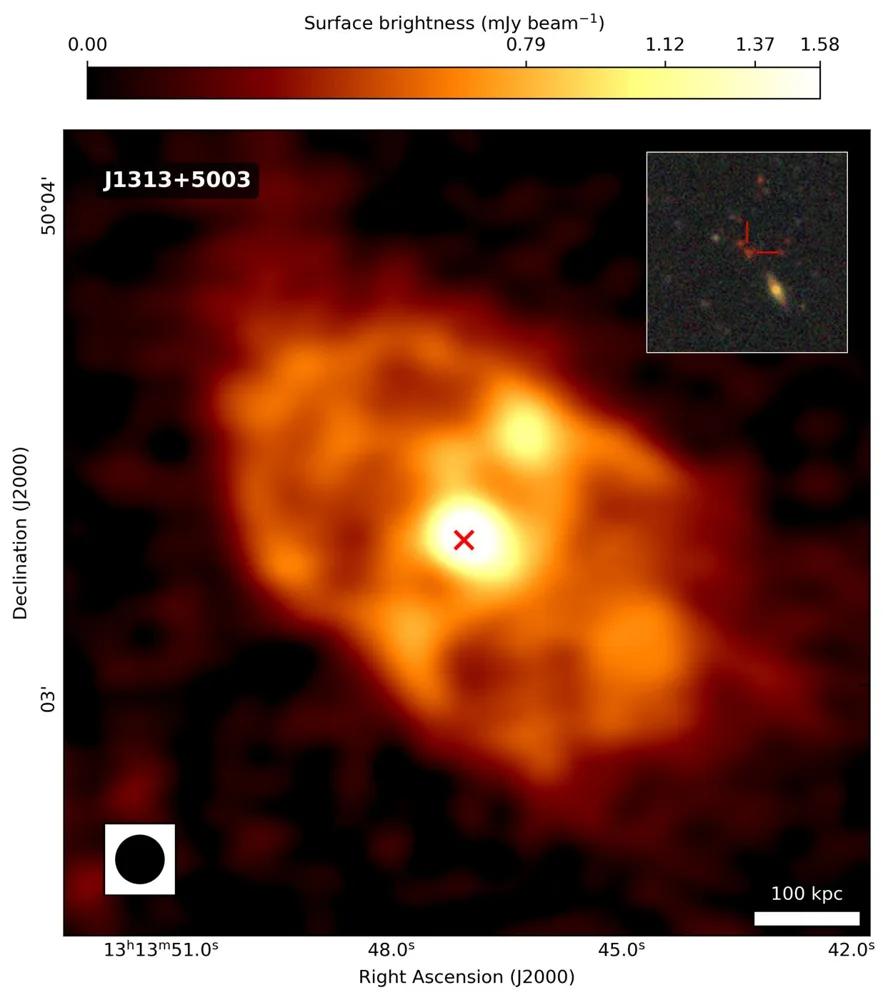
Odd radio circles (ORCs) are rare, ring-shaped radio sources about an arcminute across, and their origin is still debated. Searching the LOFAR Two-metre Sky Survey (DR3) at 144 MHz, we found 18 sources with ORC structure: four double-ringed ORCs (two of them new), five new single ORCs and nine candidates. Most sit around large elliptical galaxies, and larger ORCs tend to have steeper radio spectra.
J0823+6216 at 144 MHz, with the host galaxy in the inset.J1313+5003, one of the newly found ORCs.
De Gasperin et al. 2026, Advancing Astrophysics with the SKA
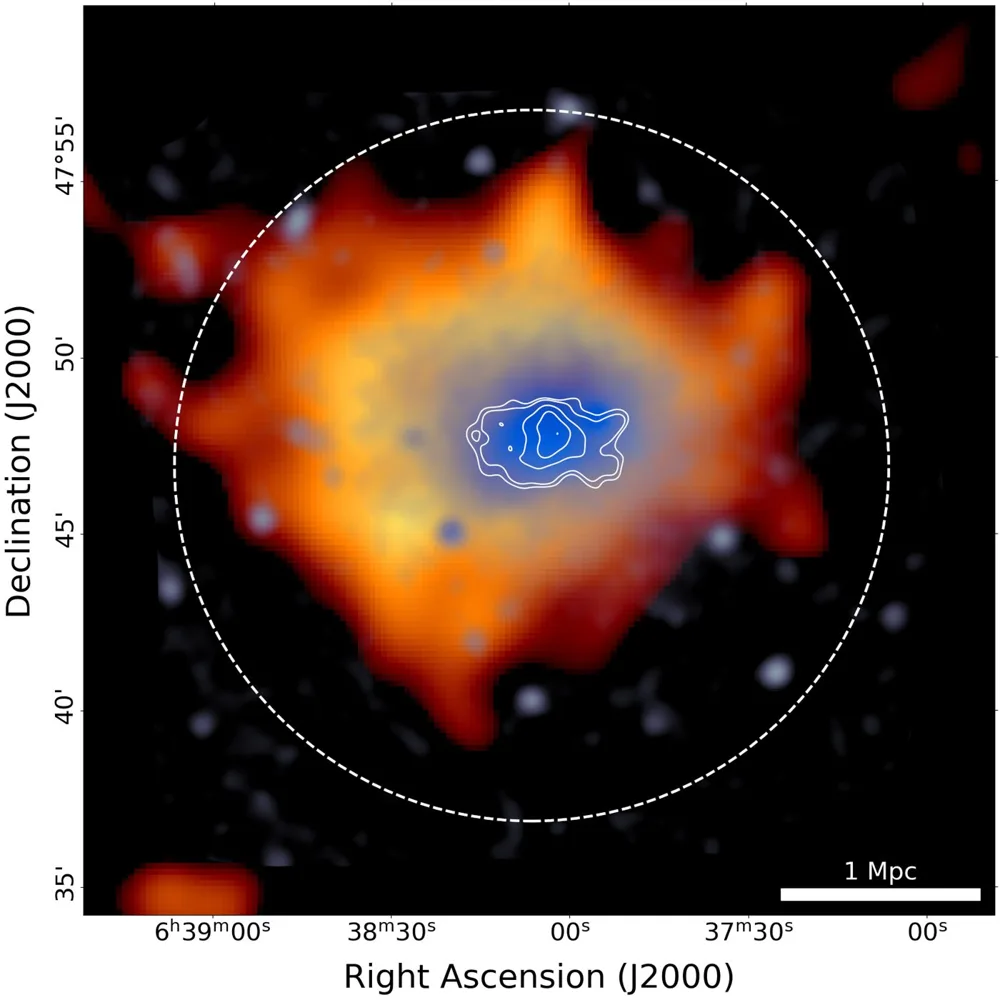
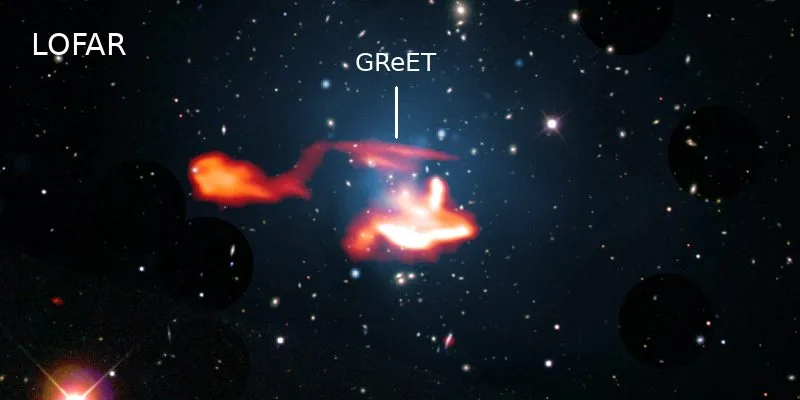
Turbulence and shocks in galaxy clusters heat the gas, amplify magnetic fields and accelerate cosmic-ray electrons, which shine as radio halos, relics and other cluster-wide sources. This chapter argues that the SKA should combine deep observations of selected nearby clusters with wide, shallower surveys: its sensitivity at low frequencies and in polarisation makes it ideal to trace magnetic fields and the old, low-energy cosmic rays that survive for billions of years.
A radio megahalo filling a whole cluster, over 1 Mpc across.A gently re-energised tail (GReET) seen by LOFAR.
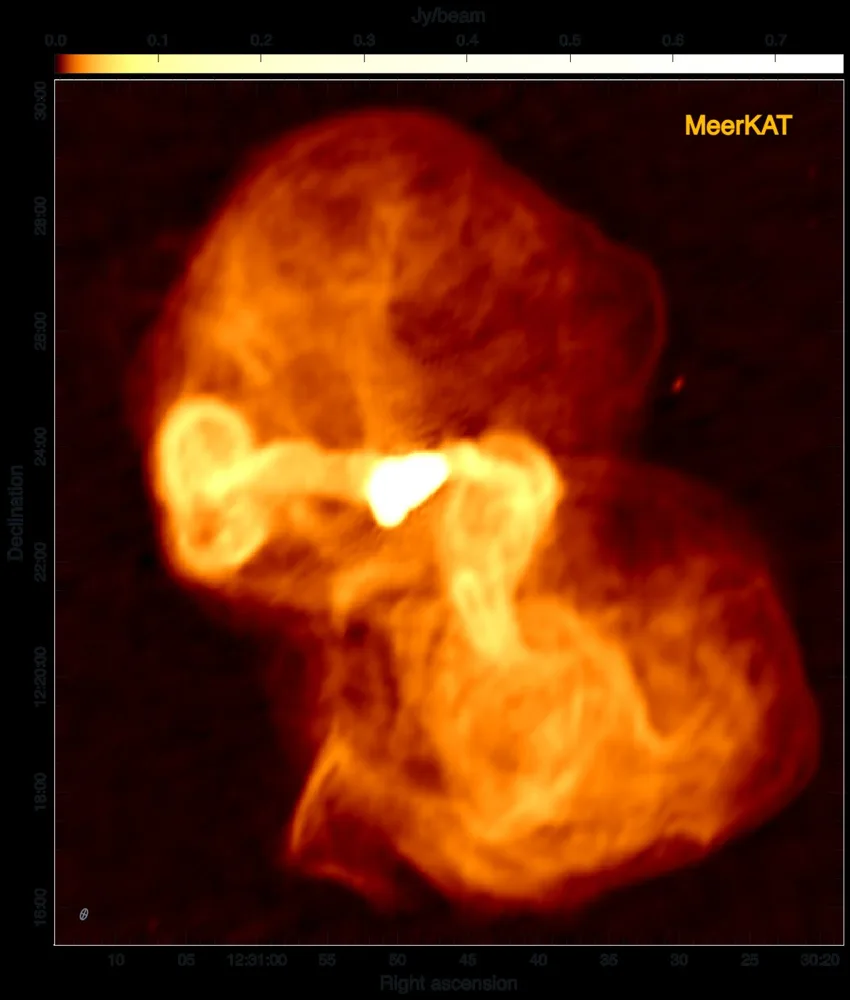
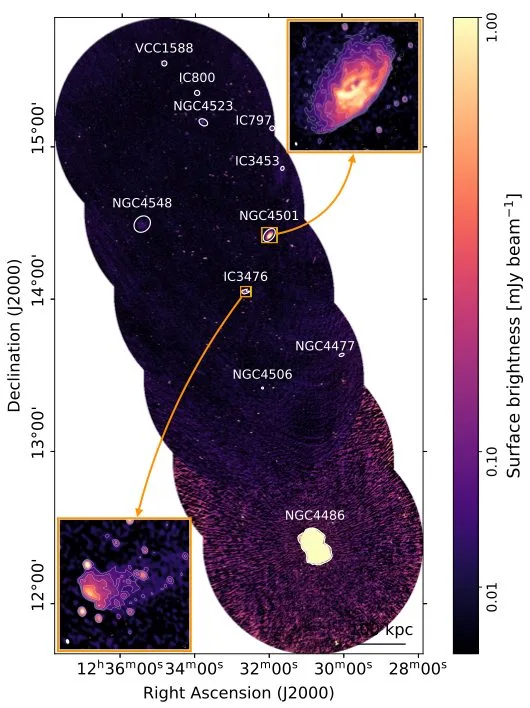
The Virgo cluster is the nearest rich galaxy cluster and is still forming, but its size and the bright radio source M 87 have made it hard to image well. ViCTORIA combines LOFAR (LBA and HBA) and MeerKAT observations from 42 MHz to 1.7 GHz, about 60 times deeper than earlier data, together with polarisation and a blind H I survey. First results include the sharpest images yet of the lobes around M 87, which turn out to be full of filaments.
The filamentary lobes of M 87 seen by MeerKAT.Part of the ViCTORIA mosaic, with zoom-ins on two galaxies.